
- 🕒 Mon - Sat 9AM - 6PM
- 📞 Phone : +91 98186 44599

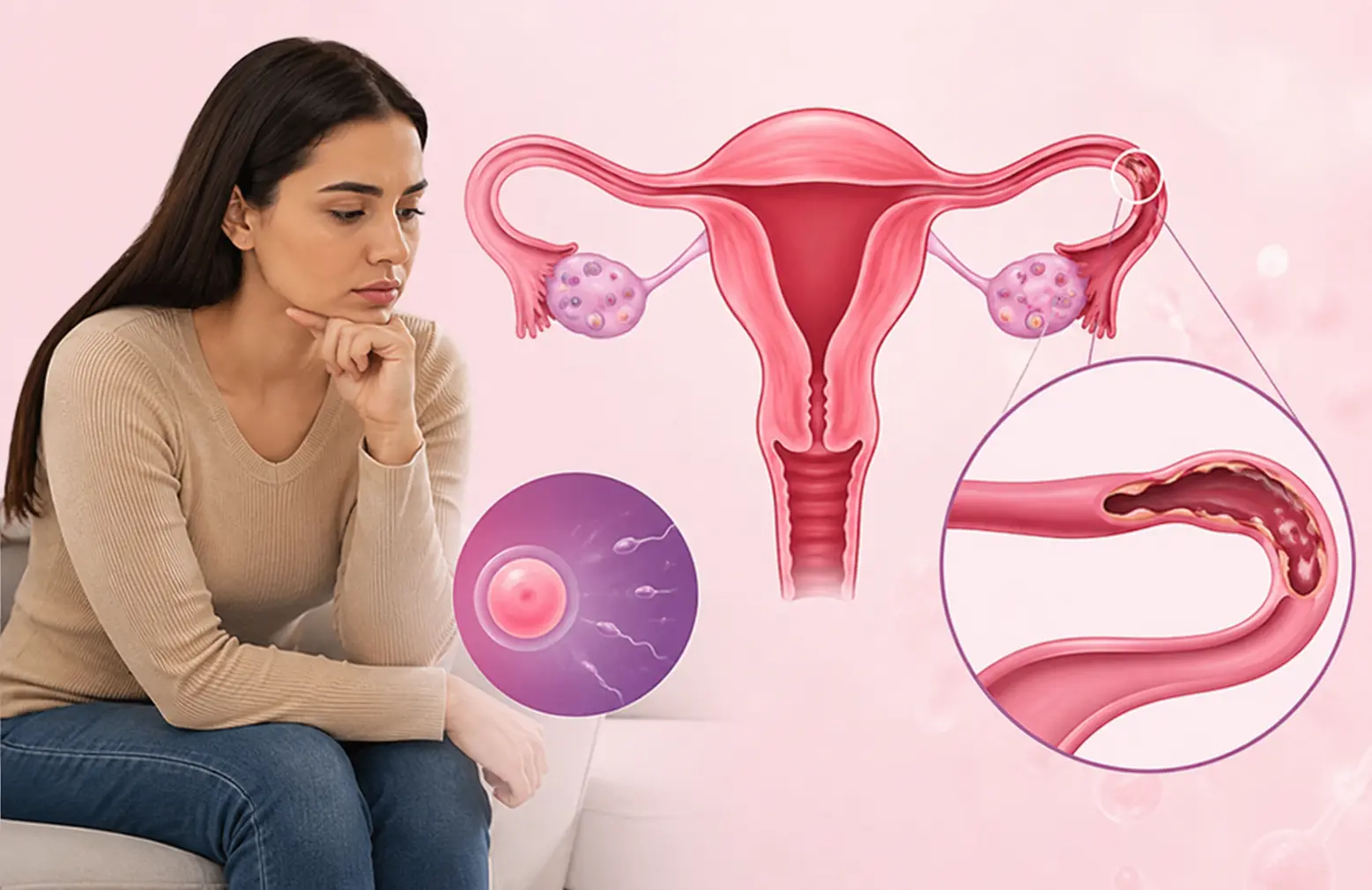
By Dr. Ram Prakash, Maaeri Fertility & IVF Centre Tubal factor infertility is a common cause of female infertility. It accounts for an estimated 25 to 40% of cases worldwide. It is also one of the most frequently missed. Blocked or damaged fallopian tubes rarely cause noticeable symptoms. Knowing what tubal factor infertility is, how it is diagnosed, and when IVF is the clearer path can prevent months or years of delay.
The fallopian tubes do three things for natural conception. They capture a released egg. They host fertilisation. They transport the embryo toward the uterus. Each step needs an open tube. Each step also needs a healthy internal lining with working cilia. Damage or blockage disrupts this. The path to natural pregnancy then closes. This often happens silently.
Inflammation is the primary driver. The common causes are a short list. Pelvic inflammatory disease is the first. PID is frequently caused by untreated STIs, including chlamydia, covered in our guide to chlamydia symptoms, causes, and diagnosis.
Chlamydia is often asymptomatic in women. Tubal scarring can be well established before it is discovered. Endometriosis is the second. It can cause adhesions around the tubes. The tubes themselves may still be open. Previous ectopic pregnancy is the third. It often results in tubal scarring or removal.
Prior pelvic or abdominal surgery is the fourth. This includes appendectomy. About 10 to 25% of tubal obstructions involve the proximal end. That is where the tube meets the uterus.
Two main investigations are used. Each has an important caveat.
Hysterosalpingogram (HSG)
The HSG is an X-ray procedure. Dye is passed through the uterus and tubes. Dye that does not flow freely suggests a blockage. A tube can still permit dye while its cilia are too damaged to work. The false-positive rate for proximal blockage on HSG is around 15%. Apparent obstruction should be confirmed before any treatment decision.
Laparoscopy
Laparoscopy gives a direct visual assessment. It can evaluate adhesions, endometriosis, and the surrounding structures at the same time. It is more invasive. It gives the most complete picture. Both investigations are part of the comprehensive fertility testing in women that we recommend before a treatment plan is finalised.
It depends on the case. For mild, distal blockage in younger women with no other complicating factors, tubal microsurgery can restore enough function for natural conception. IVF becomes the preferred route in other cases.
IVF is preferred when both tubes are blocked or severely damaged. It is preferred when hydrosalpinx is present. A fluid-filled damaged tube actively lowers IVF implantation rates. It is preferred when the patient is older or has reduced ovarian reserve. It is preferred when other fertility factors are present in either partner. IVF bypasses the tubes entirely.
Egg retrieval happens directly from the ovaries. Fertilisation occurs in our laboratory. The embryo is transferred without the tube playing any role. Tubal factor infertility is diagnosable. For most patients there is a clear treatment path. At Maaeri, identifying tubal status is a standard part of the initial workup. Knowing early means the plan is built around the actual picture. It is not built around assumptions.
Can one blocked tube still allow natural pregnancy?
Yes. One open and healthy tube keeps natural conception possible on that side. Ovulation and other factors need to be normal.
Is IVF always more successful than tubal surgery?
No. Younger women with mild, localised blockage and no other fertility factors can achieve good pregnancy rates through microsurgery. The decision depends on the severity of damage, age, ovarian reserve, and partner sperm quality.
Does chlamydia always damage the fallopian tubes?
No. Repeated or untreated infections raise the risk. A single adequately treated episode may leave no lasting damage. PID arising from chlamydia is where tubal scarring most commonly occurs.


