
- 🕒 Mon - Sat 9AM - 6PM
- 📞 Phone : +91 98186 44599

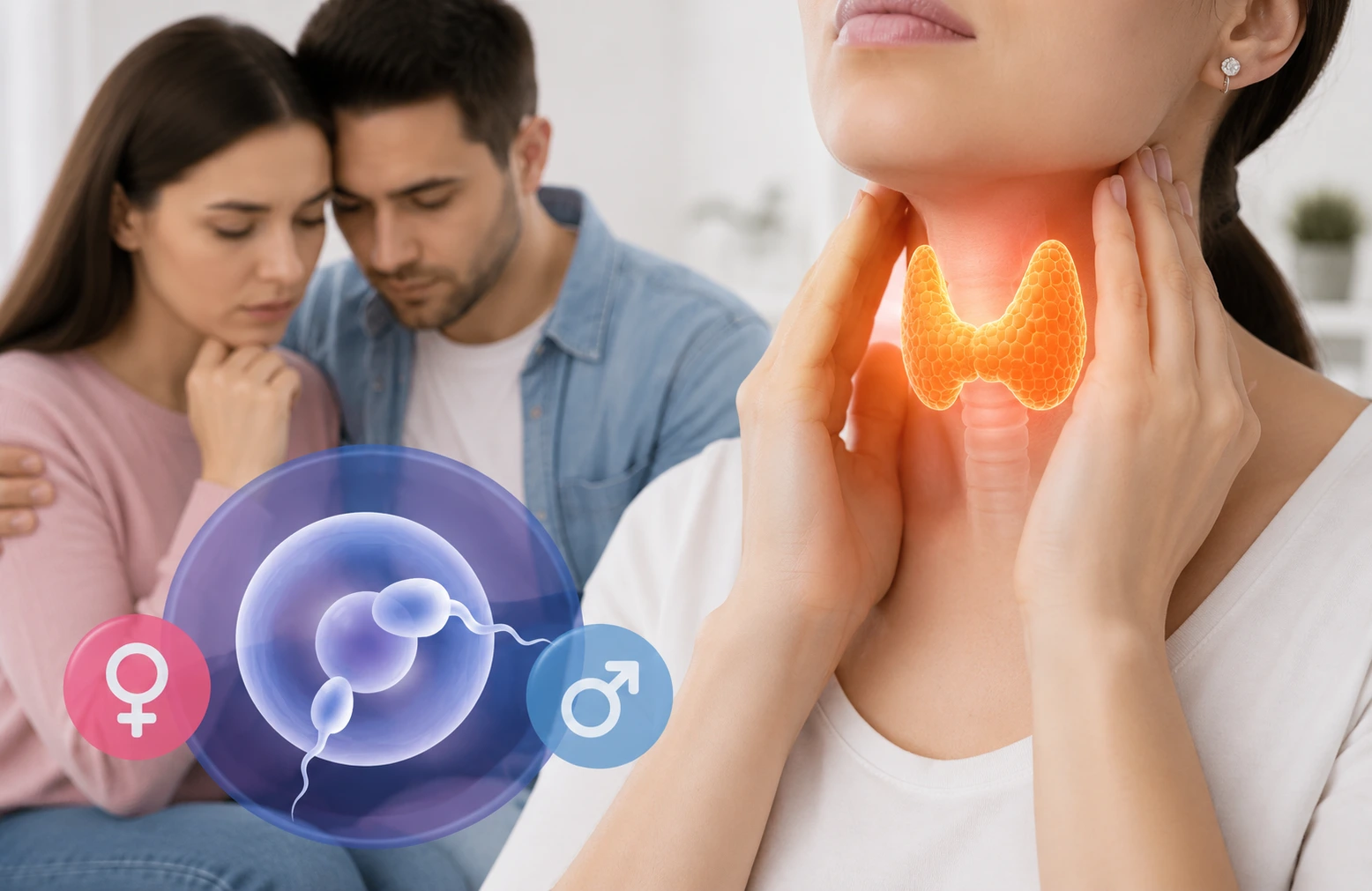
What gets missed in the thyroid-and-fertility conversation — and it isn't the part most couples already hear about.
Quick takeaways
"Have your thyroid checked" has become fairly standard fertility advice by now — most couples investigating infertility have already heard it at least once. What gets discussed less is that the thyroid-fertility story is more nuanced than a single number on a lab report, and that nuance actually matters for how your plan gets built.
Thyroid dysfunction is identified in roughly 5–10% of infertile couples, with the general prevalence of hypothyroidism in reproductive-age women sitting around 2–4%. Subclinical hypothyroidism — where TSH is mildly elevated but T3/T4 still look normal — is the more common and more easily missed version. Irregular or absent periods are one of the more visible signs, which is part of why thyroid testing often comes up alongside the broader picture in our guide to understanding your menstrual cycle.
Subclinical hypothyroidism can interfere with ovulation directly, or indirectly by raising prolactin levels, which in turn suppresses the hormones responsible for triggering ovulation. Thyroid hormone also plays a role at the other end of the process — research has linked thyroid dysfunction to effects on the endometrium itself, the same lining involved in embryo transfer and implantation. So the impact isn't limited to whether ovulation happens at all — it can extend to whether an embryo successfully implants afterward.
Here's where most popular advice oversimplifies things. Several widely cited recommendations rest on smaller, older studies suggesting TSH should stay below 2.5 mIU/L for fertility treatment, and that thyroid antibodies alone raise miscarriage risk. But more recent, larger reviews tell a more mixed story: a meta-analysis across 14 studies found no significant difference in clinical pregnancy rates between thyroid-antibody-positive and -negative euthyroid women undergoing IVF, and a separate systematic review found that TSH variation within the normal range wasn't associated with pregnancy or delivery rates either. None of this means thyroid testing doesn't matter — overt hypothyroidism and hyperthyroidism clearly do affect fertility. It means the borderline cases deserve a more individualized read than a flat cutoff number.
Where thyroid status genuinely shapes treatment is at the overt end: confirmed hypothyroidism or hyperthyroidism typically needs to be corrected and stabilized with medication before or alongside fertility treatment. At Maaeri, a full thyroid panel — TSH, T3/T4, and antibody testing — is a standard part of the initial workup, the same kind of comprehensive evaluation covered in our guide to fertility tests in women. Borderline results get interpreted alongside your cycle history and other findings, not in isolation.
Thyroid health is genuinely worth checking — that part of the popular advice is right. What's overlooked is the confidence with which borderline numbers get treated as fixed rules, when the evidence on those borderline cases is still being sorted out. That's exactly the kind of judgment call worth bringing to a specialist rather than a search engine.
This article is for general information only and isn't a substitute for personalized medical advice. Please consult a qualified fertility specialist or endocrinologist to discuss your specific thyroid results.
Written by Dr. Ram Prakash, Maaeri Fertility & IVF Centre


