
- 🕒 Mon - Sat 9AM - 6PM
- 📞 Phone : +91 98186 44599

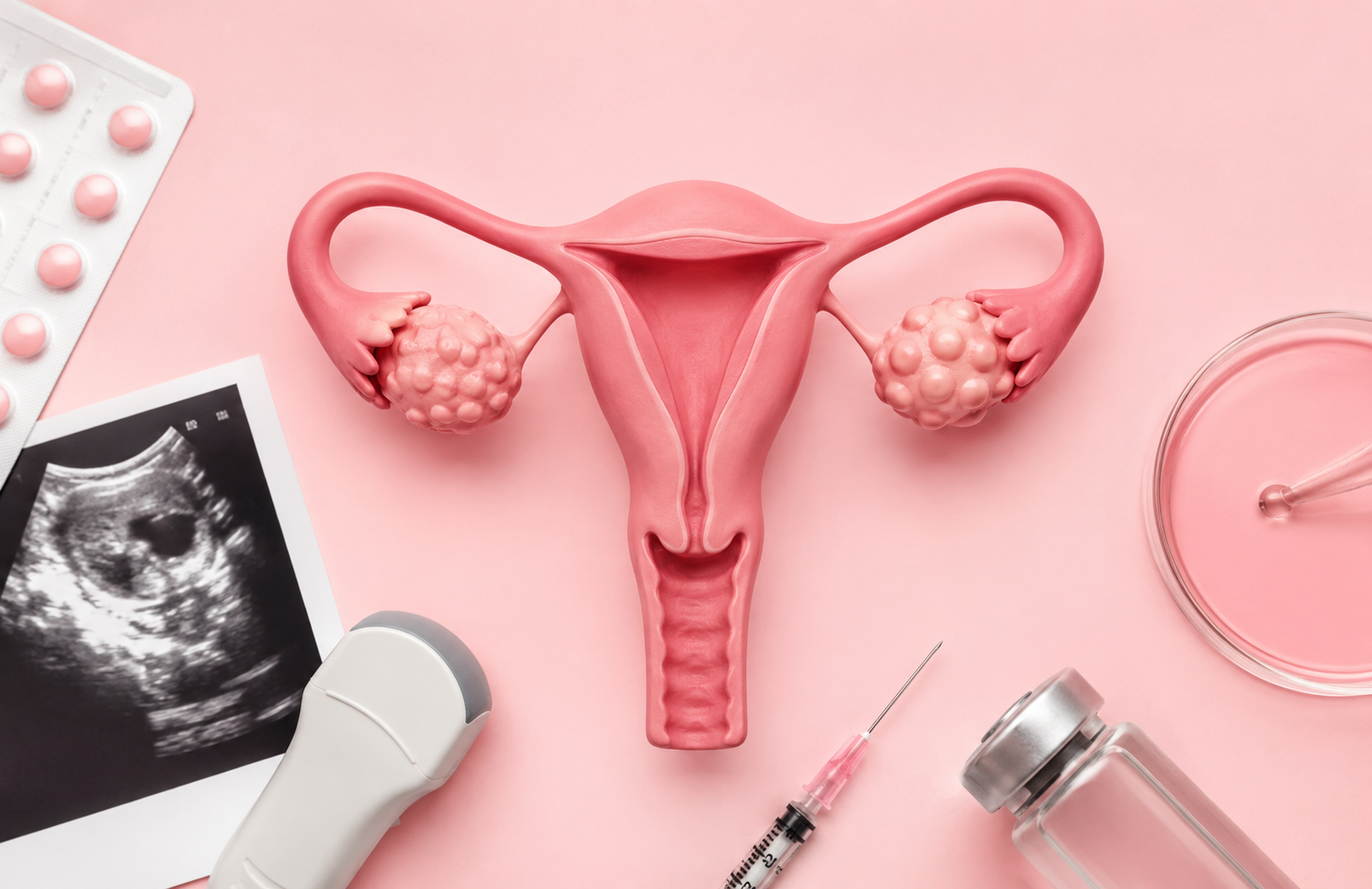
A look at PCOS IVF treatment — and why the same drugs, at the same doses, aren't the right starting point for every patient.
Quick takeaways
If you have PCOS and you're starting IVF, you may notice your protocol doesn't match what a friend without PCOS went through — different medications, different doses, sometimes a longer wait before embryo transfer. That's not inconsistency between clinics. It's a deliberate, evidence-based response to how your ovaries behave differently under stimulation.
PCOS typically means a higher number of small follicles in each ovary and, often, a higher AMH level — close to the opposite picture from what we cover in our piece on low AMH symptoms. Irregular or absent ovulation is also common, which is why understanding your menstrual cycle is often part of the conversation early on. Diagnosis usually combines hormone levels with an ultrasound follicle count, the same kind of workup described in our guide to fertility tests in women.
Because PCOS ovaries carry more follicles to begin with, they tend to respond more intensely to stimulation medication — which is exactly what raises the risk of OHSS, a condition where the ovaries become swollen and, in more severe cases, leak fluid into the abdomen. Research reviewing this risk confirms women with PCOS face a substantially higher OHSS risk than women without the condition undergoing the same treatment. This single fact is the reason almost every other protocol decision below gets made differently.
Clinical guidelines specifically recommend the GnRH antagonist protocol for PCOS patients over the alternative agonist protocol, citing improved safety with comparable success rates. The trigger shot — the injection that finally matures the eggs before retrieval — is often switched too: a randomized trial in PCOS patients found moderate-to-severe OHSS in 37.6% of patients triggered with hCG, compared with 0% in patients triggered with a GnRH agonist instead — without sacrificing egg or embryo quality. Some protocols also add metformin alongside stimulation; one review found it may cut OHSS incidence by more than half in certain protocol types. None of this changes the goal of egg retrieval itself — it changes how carefully your body is guided to get there safely.
For many PCOS patients, every embryo is frozen rather than transferred in the same cycle, with the actual embryo transfer happening in a later, calmer cycle once hormone levels have settled. Current guidelines recommend this freeze-all strategy specifically to reduce the risk of OHSS developing after retrieval. It's worth knowing this doesn't reduce OHSS risk to zero in every case — but it meaningfully lowers it, which is why it's become a standard recommendation rather than an exception.
None of this means PCOS makes IVF harder to succeed at — in several of the studies above, PCOS patients actually produced more mature eggs and higher-quality embryos than comparison groups. It means the protocol is built around your biology rather than a one-size-fits-all template. The right combination of medication, trigger, and timing depends on your specific hormone levels and follicle count, which is exactly what a consultation is for.
This article is for general information only and isn't a substitute for personalized medical advice. Please consult a qualified fertility specialist to discuss the protocol that's right for your diagnosis.
Written by Dr. Ram Prakash, Maaeri Fertility & IVF Centre


