
- 🕒 Mon - Sat 9AM - 6PM
- 📞 Phone : +91 98186 44599

By Dr. Ram Prakash, Maaeri Fertility & IVF Centre
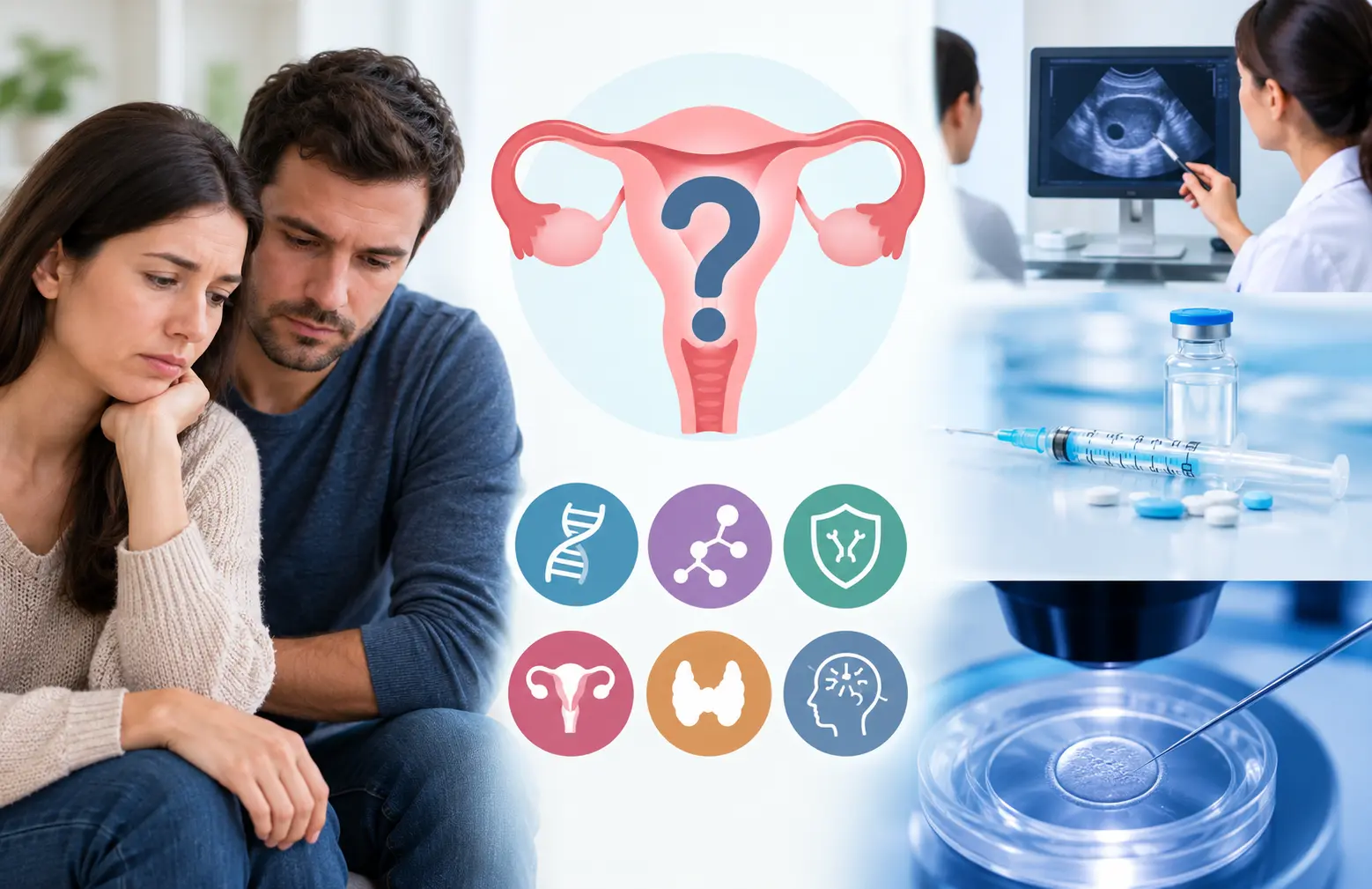
Do you know what makes unexplained infertility so hard to sit with? It begins with a diagnosis which feels like it is no diagnosis at all, because your standard fertility workup has come back with normal results and yet the pregnancy has still not happened. It affects between 10 and 20% of infertile couples and it is defined not by anything which has been found but by what has been ruled out instead. Understanding what that ruling-out process actually involves, what may still be contributing in spite of the normal test results, and which of the treatment pathways carry the strongest evidence, is where most couples genuinely need to start.
The diagnosis is one of exclusion. Before your infertility gets labelled as unexplained, a standard workup has to confirm normal ovulatory function, open fallopian tubes through either HSG or laparoscopy, a normal uterine cavity and a normal semen analysis. When all of those are within the reference range and conception has not occurred, then unexplained infertility is the appropriate diagnosis. Crucially, though, normal here means within the reference range. It does not mean that every possible factor has been evaluated, and the thing to note is that this distinction is what shapes your treatment.
Standard testing has limits which are quite clearly defined. There are several factors which routine investigation simply does not detect:
This is exactly why unexplained infertility invites further investigation rather than closing the case on you. At Maaeri we routinely check the sperm DNA fragmentation, and we extend the female investigation out to uterine structure and endometrial assessment before we move on to any treatment.
The pathway for unexplained infertility treatment follows a logical escalation:
Expectant Management
For women who are under 35 and where the infertility duration is under two years, the natural pregnancy rate without any intervention is not negligible at all, and it is considerably better than it is for the older patients or for the longer duration cases. Optimised timing along with lifestyle changes and monitoring is a reasonable first step to take.
IUI With Ovarian Stimulation
Stimulated intrauterine insemination, which is where ovarian stimulation using gonadotropins or clomiphene gets combined with sperm preparation and timed insemination, significantly outperforms natural-cycle IUI for unexplained infertility. An RCT comparing stimulated IUI with expectant management found a live birth rate of 31% with the IUI as against 9% with expectant management over three cycles, and that is a meaningful and evidence-based difference.
IVF
IVF bypasses several of the steps where those unexplained failures may be occurring, because the fertilisation happens inside the controlled environment of the laboratory rather than in the fallopian tube, and the embryo development can be directly observed. For couples who are over 35, those who have a longer duration of infertility behind them, or those who have not conceived after three to four IUI cycles, IVF is typically the next step which gets recommended. Moreover, embryo transfer after IVF allows for additional evaluation as well, because how your embryos fertilise and develop gives information which no pre-treatment test is able to provide.
IVF With PGT-A
Wherever the embryo quality is suspected as being the underlying issue, and particularly in women who are over 37, PGT-A testing of the embryos before transfer may do two things at once. It may identify the cause, meaning a high aneuploidy rate, and it may improve your outcomes by selecting the chromosomally normal embryos for transfer.
How long should we try naturally before seeking treatment?
The current guidance suggests investigating infertility after 12 months of regular unprotected intercourse in women who are under 35, or after six months in women who are over 35. Earlier investigation than that is appropriate if there are known risk factors involved.
Does unexplained infertility mean IVF is inevitable?
No it does not. A great many couples with unexplained infertility conceive through IUI or even through expectant management, and this is particularly true when they are younger and the infertility duration has been shorter. IVF is not the default first step for everybody.
What should we ask for if all standard tests are normal?
It is recommended that you consider requesting sperm DNA fragmentation testing, a detailed uterine assessment through either sonohysterography or hysteroscopy, and a discussion about whether any additional female investigations are warranted before your treatment starts.
Unexplained infertility treatment is a structured process, meaning you investigate further, then act on whatever is found, then escalate when it is needed. At Maaeri this is the approach which we take right from the first consultation. The prognosis here is generally a good deal better than the diagnosis feels.
This article is for general educational purposes and is not a substitute for personalised medical advice from your fertility specialist or embryologist


