
- 🕒 Mon - Sat 9AM - 6PM
- 📞 Phone : +91 98186 44599

By Dr. Ram Prakash, Maaeri Fertility & IVF Centre
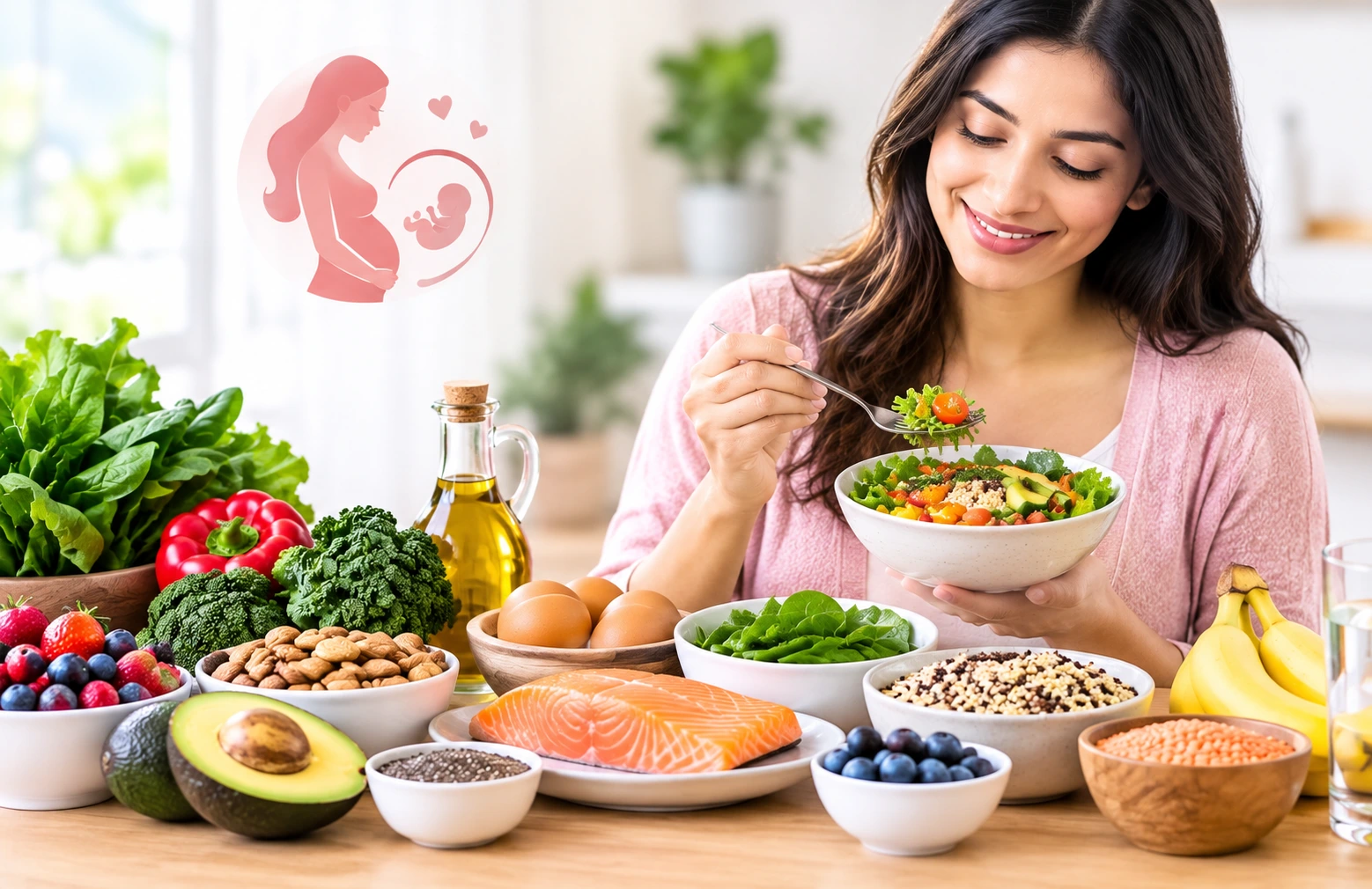
Do you know that a fertility diet to get pregnant is not actually a single prescribed eating plan at all? What it is instead is a pattern of food choices which, going on the best evidence available to us, supports your hormonal balance, your egg quality, sperm health and a uterine environment which is receptive. The science here is clearest for the Mediterranean dietary pattern, and it is worth understanding why that is rather than following a list of superfoods without any context behind it.
A systematic review and meta-analysis on dietary patterns and fertility found that a Mediterranean-style diet, meaning one which is high in vegetables and legumes and whole grains and fish and olive oil while being low in red meat and processed foods, was positively associated with fertility outcomes in both natural conception and in ART cycles, and this was replicated across multiple populations.
The mechanism behind it is not primarily about the individual nutrients. It is about the combined effect which this pattern has on inflammation, on oxidative stress and on insulin sensitivity. A diet which is high in processed foods and in trans fats is what drives the inflammation and the insulin resistance that go on to disrupt your ovulation.
Antioxidant-Rich Foods
Oxidative stress damages the DNA of both eggs and sperm. Foods which are high in antioxidants, meaning berries, leafy greens, nuts, seeds and colourful vegetables, all help in neutralising the free radicals inside the reproductive environment. Vitamins C and E, along with zinc and selenium, are the specific antioxidants which have the most direct evidence behind them for reproductive function.
Folate-Rich Foods
Folate, which you find in dark leafy greens and legumes and fortified foods, is essential for DNA synthesis and for early neural tube development. Supplementing with folic acid at 400 to 800 mcg daily before conception is one of the most evidence-backed steps which anybody who is trying to conceive can take.
Healthy Fats
Omega-3 fatty acids, which are found in oily fish such as salmon and sardines and mackerel, and in walnuts and flaxseeds, support your anti-inflammatory pathways along with hormone production and embryo development. Higher omega-3 intake has been associated with improved clinical pregnancy rates in women undergoing IVF. Trans fats, however, which are found in the commercially processed and fried foods, have the opposite effect entirely and they are worth eliminating.
Plant-Based Protein
Substituting some of your animal protein with plant sources, meaning legumes and lentils and tofu, has been associated with better ovulatory function across several observational studies, and this is likely through the effects it has on insulin sensitivity and on inflammation.
Folic acid has universal evidence sitting behind it. Beyond that one, CoQ10 and vitamin D and omega-3 supplements are commonly recommended alongside a fertility assessment, however the evidence base for those is more mixed and none of them substitutes for your overall dietary pattern.
Nutritional guidance at Maaeri is offered as a part of pre-conception counselling, because diet is one of the very few genuinely modifiable fertility factors there are, and the changes take two to three months before they affect your egg and sperm quality.
Does diet affect sperm quality as well as egg quality?
Yes it does. Antioxidant-rich diets, along with adequate zinc and selenium and omega-3 fatty acids, are all associated with better sperm concentration, motility and morphology. Male partners benefit from exactly the same dietary changes.
How long before trying to conceive should I start a fertility diet?
Egg maturation takes approximately 90 days, so the dietary changes which are made at least three months before your conception attempts or your IVF are the ones most likely to influence egg quality in that cycle. Starting even earlier than that is always better.
Can diet alone overcome a diagnosed fertility problem?
It is unlikely, particularly if the cause is structural such as tubal blockage, or chromosomal, or severe male factor infertility. Diet supports the conditions for fertility but it does not replace medical treatment wherever a specific cause exists. A fertility diet to get pregnant works best alongside appropriate clinical evaluation rather than instead of it.
Diet is a genuine lever here rather than any guarantee, and it is one of the few areas where a patient's own choices directly affect the biological outcomes. The evidence for the Mediterranean pattern is solid enough for you to act on it while the rest of the workup is still underway at Maaeri or elsewhere.
This article is for general educational purposes and is not a substitute for personalised medical advice from your fertility specialist or embryologist


