
- 🕒 Mon - Sat 9AM - 6PM
- 📞 Phone : +91 98186 44599

By Dr. Ram Prakash, Maaeri Fertility & IVF Centre
Endometriosis turns up in as many as 50% of women being investigated for infertility, and the average delay between symptoms starting and a diagnosis being made runs somewhere between seven and twelve years. Put those two facts next to each other and you have the problem. A great many women find out they have this only once they are already struggling to conceive. Knowing what to look for, and what can be done about it, is what shortens that timeline.
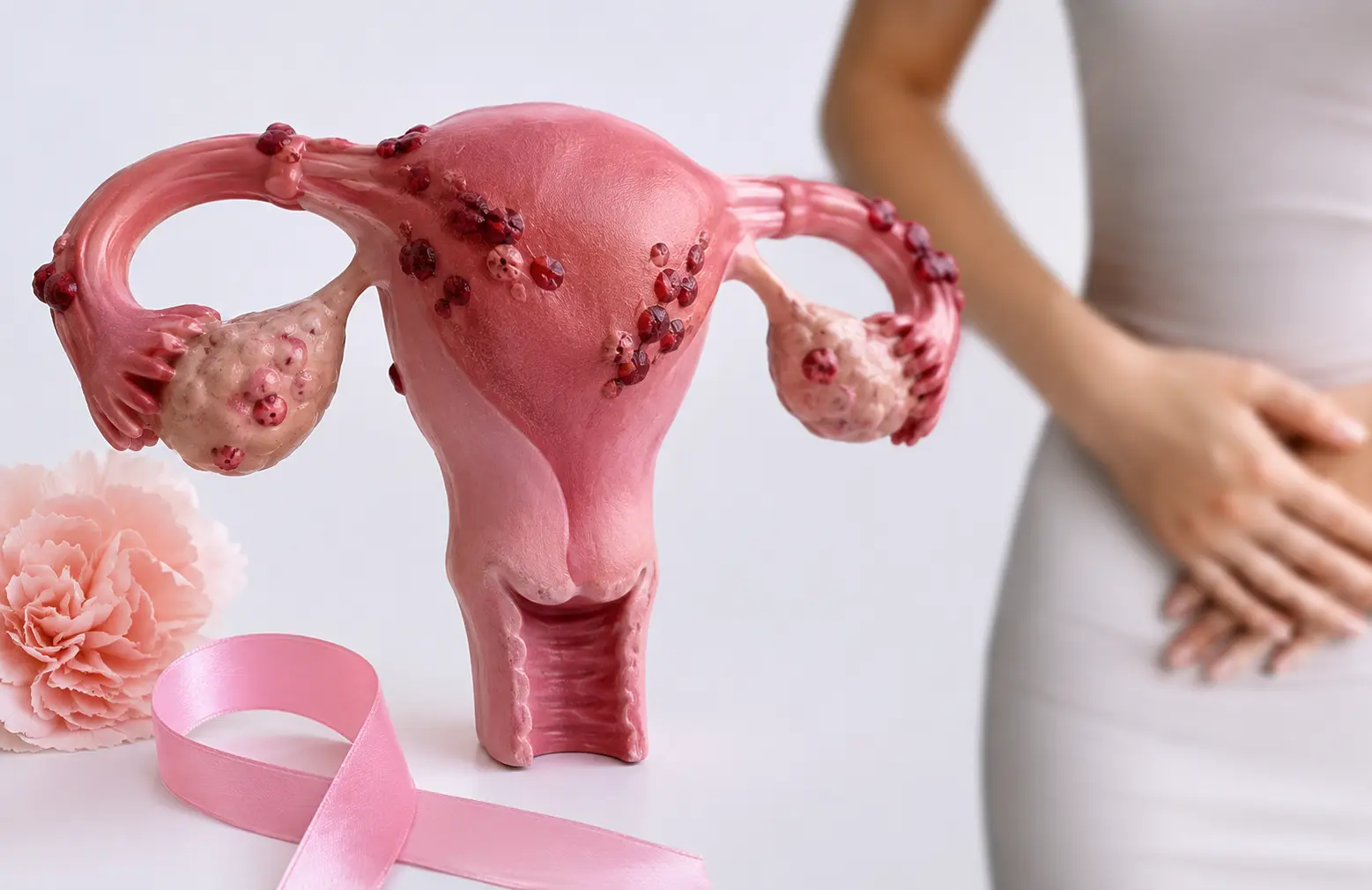
The condition means tissue resembling the uterine lining growing where it should not be, on the ovaries, on the fallopian tubes, on the bladder or the bowel, or across the lining of the pelvis. Severity varies enormously, and it does not reliably track how extensive the disease is, which is worth holding on to while reading the list below. Each of these points somewhere slightly different:
Not through one mechanism but several. The lesions set up chronic inflammation inside the pelvic cavity, which changes the environment the eggs and the tubes are sitting in. Endometriomas, the ovarian cysts filled with old blood, can cut down the functional ovarian tissue around them, and that shows up in the fertility assessment as AMH and antral follicle count. Adhesions distort tubal anatomy and interfere with the tube picking up the egg at all. And at the level of the uterus, endometriosis is associated with altered implantation receptivity, which is why it can affect an embryo transfer even where fertilisation went perfectly well.
Clinical and Imaging Assessment
A careful history of the periods and the pain, with transvaginal ultrasound alongside it, will pick up ovarian endometriomas and some of the deeper lesions. What ultrasound cannot do is rule the condition out, superficial peritoneal lesions in particular, and it is still the right place to start.
Laparoscopy
Laparoscopy is still the definitive test. It puts eyes directly on the lesions, allows histological confirmation, and gives the ASRM stage from I to IV. It has one further advantage that imaging does not. Much of what is found can be treated during the same procedure.
What is chosen depends on whether we are treating pain, treating fertility, or both at once.
Medical Treatment
Progestins, combined oral contraceptives, GnRH agonists. These suppress the oestrogen-driven activity of the disease and bring the pain down. They do not remove lesions permanently, and they are not an option for a woman actively trying to conceive, which is the limitation that matters here.
Surgical Treatment
Excision or ablation of lesions laparoscopically, drainage of endometriomas, division of adhesions. All of it can restore pelvic anatomy and improve fertility, most clearly in ASRM stage III and IV disease. We make these decisions carefully in a fertility context, and the reason is a genuine tension in the evidence. Endometrioma surgery carries a risk of reducing ovarian reserve, and operating before IVF does not automatically benefit every patient.
IVF for Endometriosis-Related Infertility
Where natural conception has not happened, or where the disease is severe enough that surgery carries real risk, IVF steps around most of the pelvic-environment problems described above. Success rates run modestly below the general IVF population, with implantation the point where that shows most. Most women with endometriosis who go through IVF do get pregnant.
Can endometriosis be cured?
No, not permanently. What medical and surgical treatment do is control the disease and manage the symptoms. Menopause does end the hormonal driving of it, which is no use as a treatment goal to a woman of reproductive age.
Does endometriosis always cause pain?
It does not. A meaningful number of women with confirmed disease have no significant pain at all, and infertility is the only sign they get. That is a large part of why the diagnostic delay runs as long as it does.
Will surgery always improve my chances of getting pregnant?
No. It depends on the stage, on where the disease is, and on what other fertility factors are in play. Get a fertility specialist to review it before committing to an operation, so the benefit and the risk are weighed for you specifically.
Catching this early, before infertility is the thing that brings someone in, changes what is possible. If the symptoms fit, a fertility assessment with detailed imaging is a sensible first move. Our team treats endometriosis-related infertility as a standard consideration in every new assessment, precisely because that diagnostic delay costs couples time they did not have to lose.
This article is for general educational purposes and is not a substitute for personalised medical advice from your fertility specialist or embryologist


